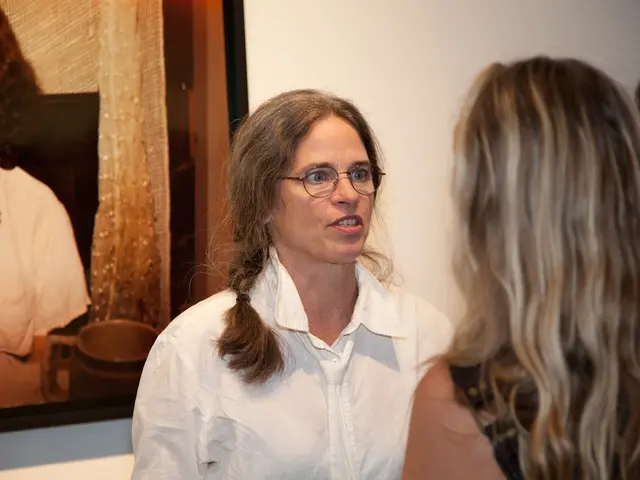

Interview Discussion: Discussion with Claire F. Gmachl on Recent Research Findings
In a recent interview with Shannon Yeow, Engineering Correspondent, Professor Claire Gmachl shared her enthusiasm for the Research Insights Series and discussed her work in the field of mid-infrared (mid-IR) photonics and semiconductor devices.
Professor Gmachl's fascination with semiconductor devices began during her academic years, where she rotated through various areas, including atomic physics, electronics, and semiconductor devices. Her research now focuses on mid-IR photonics, specifically on improving the efficiency of semiconductor devices and exploring applications in environmental sensors, chemical sensors, and fabrication plants.
One of the key areas of Professor Gmachl's research is the study of disordered hyper-uniform structures, which could have real application for image analysis. Additionally, her group works on the design of quantum cascade lasers and ring lasers, the latter of which could have significant implications for making better chemical sensors.
The interview did not reveal any new information about the specific applications of Professor Gmachl's research, but it did emphasise the importance of passion and courage in engineering-focused research.
Looking ahead, mid-IR photonics is expected to be revolutionised by the integration of quantum technologies. Quantum sensors, for instance, can provide highly precise measurements, leveraging quantum physics phenomena to enhance detection capabilities. New technologies such as nonlinear interferometers and quantum Fourier transform infrared spectroscopy are also being developed to overcome the limitations of existing mid-IR instruments, such as high cost and complexity, by providing compact and cost-effective solutions.
Future developments in mid-IR photonics are also focused on improving the speed of imaging techniques and enhancing spectral and spatial resolution. Techniques like mid-infrared energy deposition spectroscopy are offering improved temporal and spatial resolutions, further enhancing the capabilities of mid-IR photonics in various fields.
In conclusion, mid-infrared photonics continues to evolve with a focus on integrating quantum technologies and improving the efficiency and resolution of sensing and spectroscopy techniques. This field is poised to play a crucial role in advancing medical diagnostics, environmental monitoring, and industrial sensing applications.
As the interview concluded, Shannon Yeow expressed excitement for the next article in the Research Insights Series. The interview may have inspired students with a keen interest in engineering-focused research to utilise the research opportunities available on campus.
Participants in the Research Insights Series, like Shannon Yeow and Professor Claire Gmachl, frequently discuss groundbreaking work in fields such as science and technology. For instance, Professor Gmachl's research in mid-infrared (mid-IR) photonics, particularly the study of disordered hyper-uniform structures, could potentially contribute to education-and-self-development by aiding in the creation of junior paper topics focused on environmental sensors, chemical sensors, and fabrication plants.